By ADITHI RAMAKRISHNAN AP Science Writer
NEW YORK (AP) — When professional home organizer Britnee Tanner visits her clients, she often spots extra reusable bags buried under the kitchen sink or stuffed in a corner of the pantry.
“They just are sneaky,” said Tanner, who lives in Salt Lake City. “I purchased a handful of these and then somehow I’ve collected ones I’ve never purchased, and I don’t really know where they’ve come from.”
Reusable totes are intended as durable alternatives to single-use plastic bags. But it’s easy to accumulate too many, from freebies at events to giveaways at the grocery store.
The environmental impact of a reusable bag is relatively small, so ending up with a sizable stash isn’t a significant problem. Still, paring down can declutter cupboards and lead to a smaller collection that’ll actually get used. As for the excess, donate to food banks and thrift stores.
“You don’t want an entire closet of reusable bags,” said sustainability scientist Shelie Miller with the University of Michigan. “You want well-loved reusable items, and that’s really what gives the environmental benefit.”
Reusable bags are helpful but can accumulate
Single-use plastic grocery bags aren’t meant to last. They become urban tumbleweeds or break down in the environment, releasing harmful microplastics. Single-use plastic shopping bags are banned across 12 U.S. states, and several more cities and towns have instituted their own initiatives, including bag taxes.
As a result, many people stock up on reusable bags made from canvas, cloth or thicker plastic. A few solid, durable bags used for errands or groceries can stand the test of time. Environmental economist Kimberly Oremus uses hers for up to a decade. But whether we intend to or not, additional bags of various shapes and sizes worm their way into our homes.
Just like any product, reusable bags require energy and resources to make — like the water that’s used to grow cotton. Researchers have found that the number of times a bag needs to be reused to offset the environmental cost of its production varies widely based on what the bag is made of.
There isn’t a magic number of uses to strive for, but durable bags that look and feel thicker tend to accrue more environmental debt than flimsy plastic totes and need to be reused more times to pay it off.
Reusables “are generally good for the environment, with the caveat that they have to be reused,” said Miller.
Save your best reusables and donate the rest
The simplest way to cut down on a reusable bag supply is to avoid getting new ones. But life gets in the way, and people get stuck at the store empty-handed. When Oremus forgets to bring a reusable bag to the store, she asks the employees if they have any empty cardboard boxes for her to use.
“If you forget it, it’s not the end of the world,” Oremus said. She tries to use her reusable bags until they can’t be used anymore, then donates the scraps to textile recycling centers.
If you’ve already accumulated a crowded kitchen cupboard, save the best and give away the rest.
Home organizer Tanner tells clients to pick out their favorites and assign a job to each. Reserve one bag for library books, a handful for groceries and another for packed lunches. After using one, put it back where it came from — be it the trunk of a car or inside a purse — so it’s ready for the next use.
As for the extras, give some to a friend or offload a larger amount by donating. Reusable bags generally can’t be recycled through curbside programs.
Tanner brings her extras to thrift stores. Other stores or food banks may also accept donations.
Las Vegas Books accepts reusable bag donations to hand out when customers at the used book store in Nevada need one. Burbank Animal Shelter in California uses larger totes for food, toys and other pet care supplies.
The Community FoodBank of New Jersey has collected reusable bags since 2022 for neighbors who visit their food pantries. They welcome bag donations as long as the items are reasonably clean and not ripped.
“They’re always something that our pantries need, and that we have available on hand whenever we can,” said the organization’s president, Elizabeth McCarthy.
___
The Associated Press’ health and science coverage receives financial support from the AP Fund for Journalism and private foundations. AP is solely responsible for all content. Find AP’s standards for working with philanthropies, a list of supporters and funded coverage areas at AP.org.
News
There’s an easy way to get rid of all the reusable bags piling up in your home
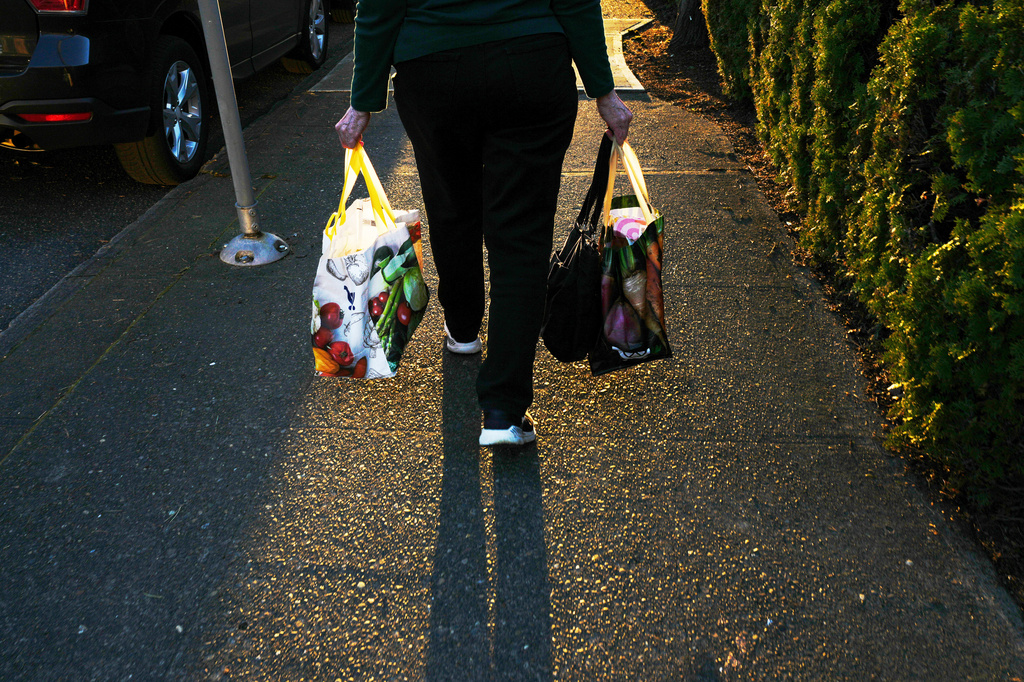
FILE - A woman carries reuable shopping bags to her car March 16, 2026, in Portland, Ore. (AP Photo/Jenny Kane, File) Photo: Associated Press